Epigenetic Technologies in Forensic Sciences
A New Frontier for Human Identification
DOI:
https://doi.org/10.47419/bjbabs.v7i1.432Keywords:
Epigenetics, Forensic science, DNA Methylation, DNA phosphorylation, DNA Methylation Strategies, Bisulfide PyrosequencingAbstract
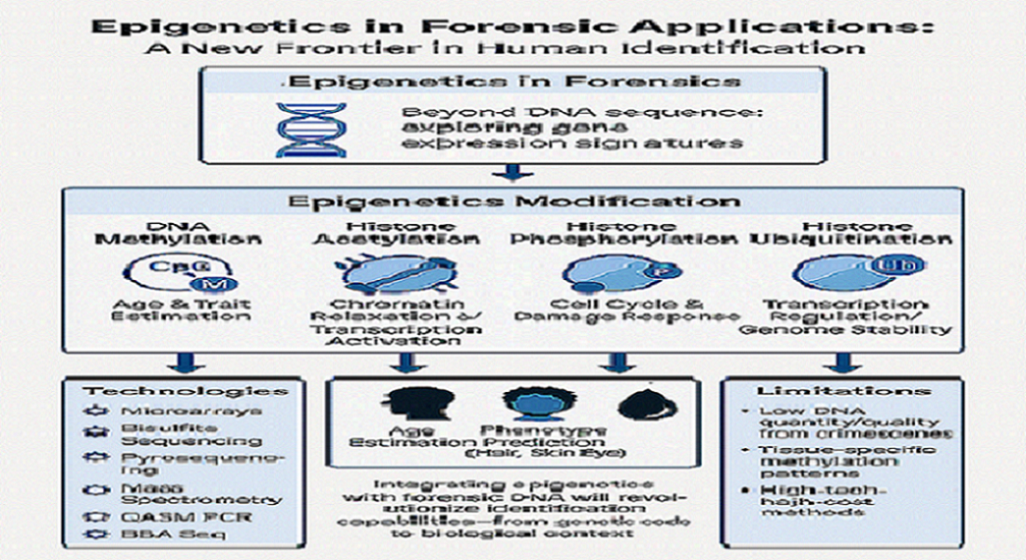
Epigenetics, the study of heritable changes in gene function that occur without altering the DNA sequence, has emerged as a transformative field in modern biology. These molecular modifications particularly DNA methylation and histone alterations can persist through cell divisions and play a critical role in regulating gene expression. In recent years, the surge in epigenetic research has opened new doors, not only in medicine and developmental biology, but also in forensic science. What makes epigenetics especially compelling in forensics is its ability to reveal information beyond genetic code. Techniques that analyze epigenetic markers now offer the potential to estimate an individual’s age, and even predict visible traits such as hair, skin, and eye color providing powerful tools to narrow down suspects when traditional DNA profiling falls short. This review explores the major types of epigenetic modifications, their forensic applications, and the key markers used in identifying physical traits and biological age. It also discusses the technological requirements and current limitations of epigenetic analysis in forensic investigations, as well as the most recent advancements in detecting and interpreting histone modifications.
Downloads
Additional Files
Published
Issue
Section
Categories
License
Copyright (c) 2026 Omar A Mahmoud, Dunya A. Muhammed, Sahar M. Ibrahim, Muhammed A. Hameed, Shahrazad H. Muhi, Farah B. Abd

This work is licensed under a Creative Commons Attribution 4.0 International License.
The authors retain all proprietary rights, including copyright, such as patent and trademark rights and rights to any process or procedure described in the article.