Association between Aflatoxin B1 and Type 2 Diabetes Mellitus in Women
DOI:
https://doi.org/10.47419/bjbabs.v7i1.429Keywords:
aflatoxin B1, type 2 diabetes mellitus, mycotoxins, HbA1c, FBSAbstract
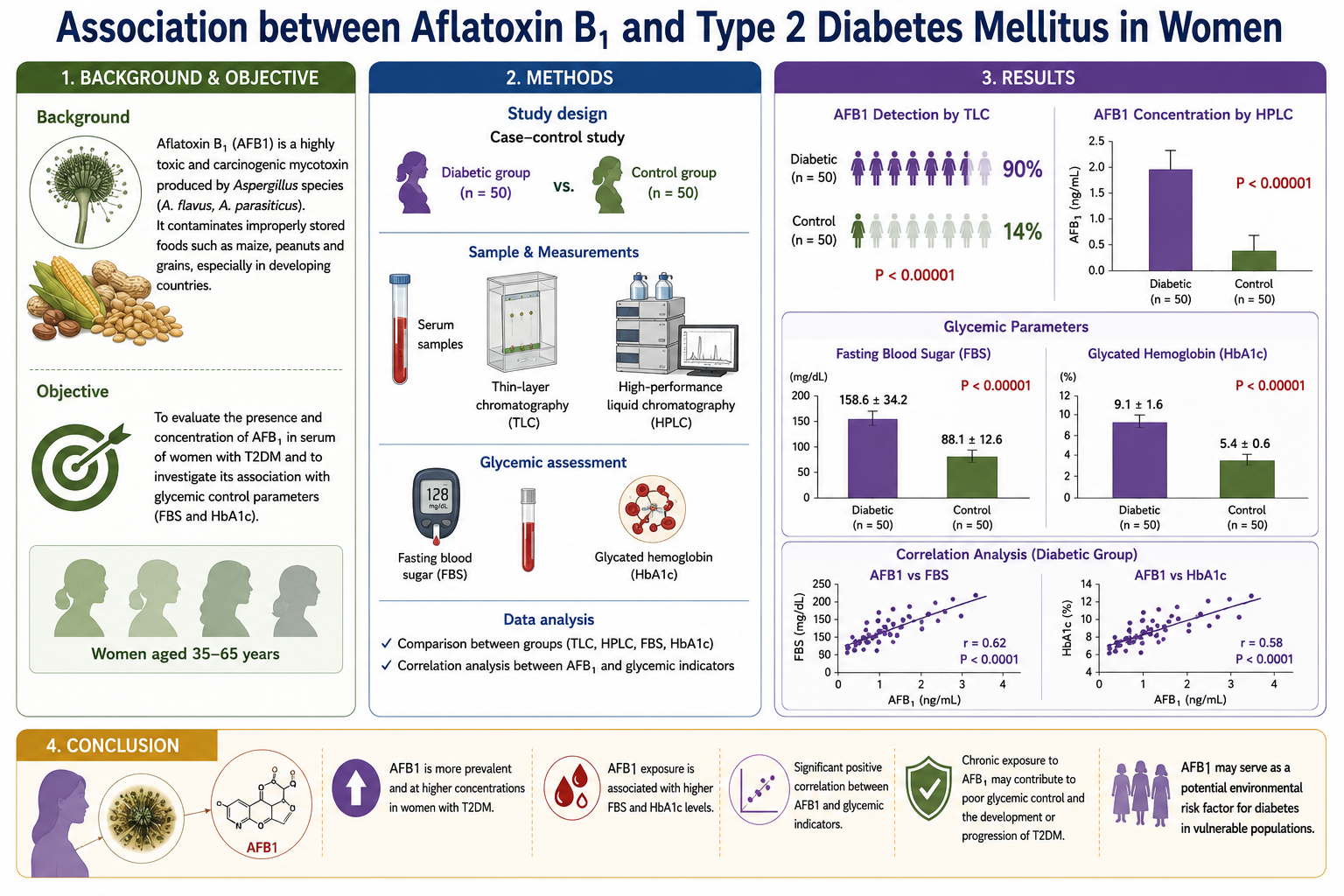
Background: Aflatoxin B1 (AFB1) is a highly toxic and carcinogenic secondary metabolite. It is produced by certain Aspergillus species, especially A. flavus and A. parasiticus. AFB1 is commonly detected in improperly stored food products, such as maize, peanuts, and grains, particularly in developing countries.
Objective: This study aimed to evaluate the presence and concentration of AFB1 in the serum of women with type 2 diabetes mellitus (T2DM) and to investigate its potential association with glycemic control parameters, specifically fasting blood sugar (FBS) and glycated hemoglobin (HbA1c).
Methods: A case–control study was conducted on 100 women aged 35–65 years, including 50 diabetic patients and 50 healthy controls. Serum AFB1 levels were measured using thin-layer chromatography (TLC) and high-performance liquid chromatography (HPLC). Glycemic status was evaluated using FBS and HbA1c. Correlation analysis was performed to assess the relationship between AFB1 and glycemic indicators.
Results: AFB1 was detected in 90% of diabetic patients and 14% of controls using TLC, with a statistically significant difference (P < 0.00001). HPLC analysis showed significantly higher AFB1 concentrations in the diabetic group. Additionally, FBS and HbA1c levels were markedly elevated in diabetic patients. A significant positive correlation was observed between AFB1 concentration and both FBS and HbA1c.
Conclusion: The findings suggest that chronic exposure to AFB1 may be associated with poor glycemic control and possibly with the development or progression of T2DM. AFB1 may serve as a potential environmental risk factor for diabetes in vulnerable populations.
Downloads
Additional Files
Published
Issue
Section
Categories
License
Copyright (c) 2026 zainab ali, Sami Abdul-Redha Al-Jumaily

This work is licensed under a Creative Commons Attribution 4.0 International License.
The authors retain all proprietary rights, including copyright, such as patent and trademark rights and rights to any process or procedure described in the article.